


Cash App
Block, Inc.
I found Cash App most useful when I treated it as a personal money hub rather than a shared household wallet. It can bring payments, banking tasks, investing, and bitcoin activity into one place, which makes everyday coordination feel simpler. At the same time, that convenience makes account boundaries important: the person signed in is the person controlling the financial activity, so sharing a phone or casually handing over an unlocked account deserves more thought than sharing a streaming app.
As a free finance app from Block, Inc., it has become a familiar option for sending money and handling several kinds of financial activity from a phone. Its average rating is 4.7 from around 4 million ratings, and it has passed 100 million installs. Those figures suggest broad adoption, but they do not remove the need to decide whether its particular mix of payment and money tools fits the way your household actually operates.
How Cash App fits into a shared household
Imagine a normal weekday: one person buys groceries, another pays for a school activity, and a third family member needs money for transport. In that situation, I can see the appeal of having a quick payment tool ready on a phone instead of relying on cash or waiting for a bank transfer. The app is especially convenient when the people involved already use it and the amount is straightforward.
Related News

Is Cash App Worth the Switch for Everyday Payments?

Mastering Cash App: Unlock Hidden Features and Boost Savings

Uber: The Unsung Champion of Urban Mobility
My first practical rule would be to keep one account tied to one person, even if several people coordinate expenses together. A household can discuss who should pay, how much to send, and when to settle up, but the account itself should not become a communal login. That distinction matters because a payment app is connected to real financial decisions, not just a shared list of household chores.
For shared expenses, I would use a simple routine: agree on the purpose in a message, send the money, and keep the transaction note clear enough to recognize later. That small habit is more valuable than trying to remember who covered what. It also reduces the chance that a quick transfer for groceries gets confused with money intended for a bill or a personal purchase.
Related News

Why WhatsApp Messenger Still Makes Everyday Communication Feel Easy

Jurassic World: The Game Is the Better Dino Tycoon for Strategic Players

Threads in Real Life: Who Should Join, Lurk, or Leave

How SHEIN Turned Shopping Into an Endless Content Feed

How to Make Fortnite Feel Smarter on Mobile

Should You Switch to Microsoft Outlook on Mobile?
The app’s wider range can help in a household where one adult wants payments and another wants banking or investing tools. I would still resist treating those areas as interchangeable. Sending money to a friend, moving money for everyday spending, buying bitcoin, and investing each carry different expectations and risks. Keeping those purposes mentally separate makes the account easier to manage.
Why a personal account works better than a shared login
A shared device is not automatically a shared financial account. If a tablet or phone sits in a family room, I would sign out when appropriate and use the device’s own security features rather than assuming that everyone in the home can be trusted with an open session. Convenience is useful, but it should not come from removing every boundary.
This is also where Cash App differs from a household budgeting tool. A budgeting app is usually built around visibility, categories, and planning. Cash App is more directly connected to sending and using money. I would choose it for quick transactions and personal financial access, not as the main place to create a shared family budget or maintain a complete record of every household obligation.
Gallery
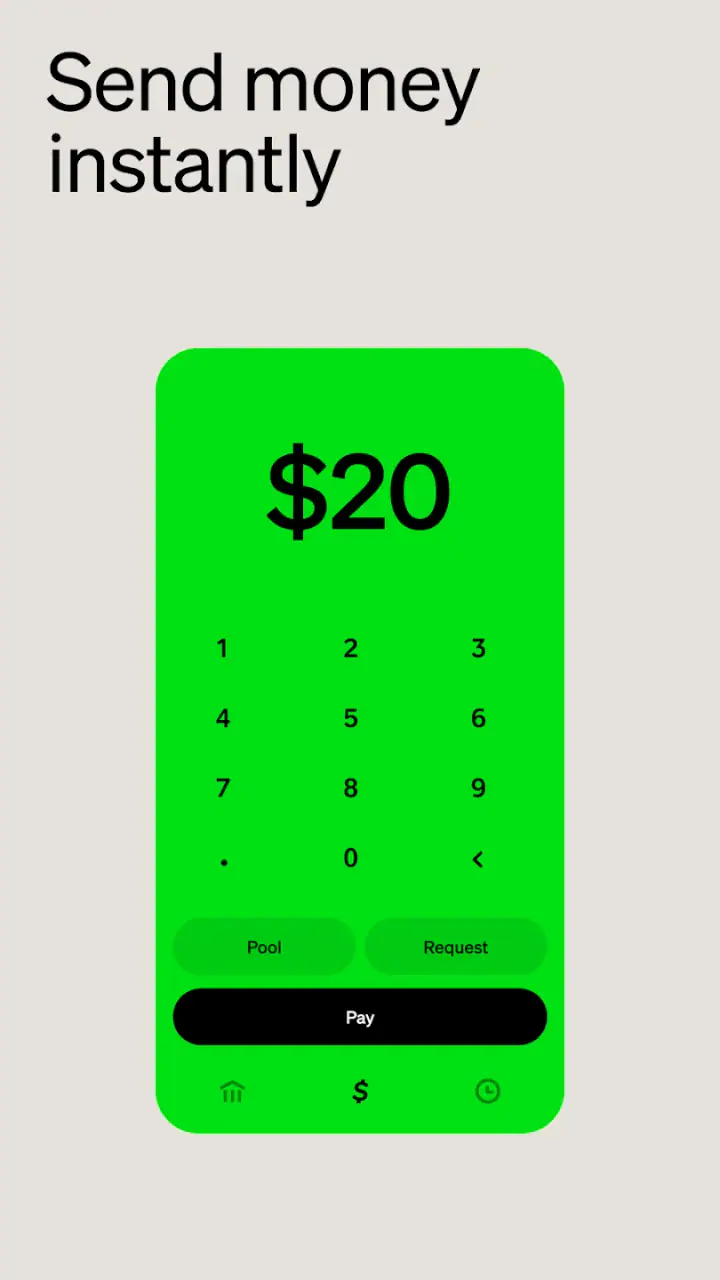
Another non-obvious point is that coordination should happen before the transfer, not after it. If a partner sends money without explaining whether it is reimbursement, a gift, or a contribution to a shared purchase, the speed of the app can create confusion rather than solve it. A short note outside the transaction can prevent a surprisingly long conversation later.
Setting boundaries during setup
When I set up a finance app for personal use, I think about three boundaries first: who owns the account, which device can access it, and what the account is being used for. That approach is particularly important here because the app combines payments with other money functions. I would not let a child use an adult’s signed-in account simply because the child needs to make an occasional purchase.
The account holder should be the person who understands the activity and can take responsibility for it. In a couple, that may mean deciding whether one person handles shared transfers while both people review the household plan separately. In a multigenerational home, it may mean helping someone navigate the app without taking over their credentials or making decisions on their behalf.
I would also begin with a small, ordinary transaction before relying on the app for a time-sensitive payment. That gives everyone a chance to confirm that the recipient is correct and that the process feels clear. The most common mistake with fast payment services is not usually finding the send button; it is sending money to the wrong person or misunderstanding what the transfer represents.
Cash App is free to download and use as an app, which lowers the barrier to trying it. Still, “free” should not be interpreted as “every possible financial action has no cost.” Before using any optional money service, I would read the displayed terms and confirmation screen carefully. That is especially important when moving beyond ordinary person-to-person payments into investing, bitcoin, or banking-related activity.
The current version is 5.30.0 and requires an operating system version of 10 or later. For a household with older phones, that requirement is worth checking before planning around the app. A device that cannot run the current app should not become the informal reason everyone shares one person’s account.
Coordinating money without losing track
I like the idea of using Cash App for clearly defined moments: splitting a takeaway order, reimbursing a relative for a purchase, or sending a known amount before an outing. These are easier to manage than vague, ongoing arrangements. If the household needs a running balance for rent, utilities, groceries, and subscriptions, I would pair the app with a separate written or digital record rather than expecting payment history alone to serve as a full budget.
A useful workflow is to settle one expense at a time. Suppose I buy household supplies and my partner agrees to cover part of them. I would send the receipt or a short breakdown first, agree on the amount, and then use the app for the reimbursement. That keeps the payment quick while leaving the explanation where both people can find it.
For recurring responsibilities, I would be more cautious. A quick payment app is convenient for occasional coordination, but regular household obligations may be better handled through the relevant bank, biller, or a dedicated budgeting system. Those alternatives can be more suitable when the priority is scheduled payments, formal records, or a shared overview rather than speed between individuals.
One strength I noticed in this kind of workflow is flexibility. The same app can be relevant when a friend needs a small reimbursement and when an adult wants to explore investing or bitcoin. One weakness is that this range can blur the difference between simple spending and higher-risk financial activity. I would never let the convenience of the payment screen encourage an impulsive investment decision.
For a shared household, notifications and transaction awareness should be handled through agreement, not assumptions. One person should not silently monitor another adult’s personal spending just because the app is installed on a common device. At the same time, truly shared money needs a clear review habit. The right balance is an agreed process, not unrestricted access.
Age, trust, and responsible access
The content rating is Everyone, but that label does not turn the app into a child-focused financial product. Money decisions still require judgment, and a young person may not understand the consequences of sending funds, sharing account information, or moving from everyday payments into investing and bitcoin. I would introduce the app through supervised education about money rather than by giving a child access to an adult’s account.
Trust also has a practical side. Even within a close family, I would avoid sharing passwords, verification details, or an unlocked phone with the app open. Helping someone complete a transaction is different from allowing them to operate an account without the owner present. If an older relative needs assistance, I would sit with them, explain each step, and let them remain the decision-maker whenever possible.
This is one area where a traditional bank may be a better fit. Banks often provide a more familiar structure for joint finances, formal account ownership, and household money that belongs to more than one adult. Cash App feels better suited to personal control and quick transfers. I would not choose it as the sole foundation for a family’s long-term shared finances without first considering those ownership needs.
For teenagers or younger users, the right question is not simply whether the app can be installed. I would ask whether the person understands who is receiving the money, what the payment is for, and how to recognize a suspicious request. If the answer is no, the safer choice is to keep the transaction with a responsible adult and teach the process gradually.
That same caution applies to bitcoin and investing. These features may be interesting to an adult who wants several financial tools in one app, but they are not casual extensions of sending money to a friend. I would keep a separate limit in my own thinking: everyday payment decisions should not automatically lead to investment decisions, and a child’s request for spending money should never be used as a reason to expose them to higher-risk features.
What the app does well in everyday use
Cash App’s strongest quality is concentration. Instead of jumping between a messaging app, a bank app, and a separate investing service, I can handle several money-related tasks from one familiar place. That is useful for someone who wants a straightforward mobile-first experience and does not need every household finance function to be joint or formal.
The payment side is also easy to understand conceptually. I know why I am opening it: to send money, receive money, or check an activity connected with the account. That directness is more appealing than a traditional banking interface when the task is small and immediate.
Its scale is reassuring in one limited sense. The app has been available since October 15, 2013, and the large number of users means it is likely to be familiar to people in many social circles. Familiarity can reduce friction when splitting expenses, because the recipient may already know how to use the service.
Still, popularity is not the same as universal suitability. If the people I need to pay all use different services, the convenience disappears. In that case, a bank transfer or another widely accepted payment method may create less back-and-forth. I would choose based on the actual network around me, not on the install count alone.
Where I would choose something else
I would skip Cash App as the primary household solution if I needed two adults to own and manage money formally together. A bank account designed for joint use would make more sense for shared income, major bills, and long-term savings. The app can support coordination, but coordination is not the same as shared legal ownership or a complete family ledger.
I would also look elsewhere if my main goal were detailed budgeting. A dedicated budgeting app can be better for assigning categories, planning future expenses, and seeing whether a household is staying within limits. Cash App can move money that belongs to a grocery budget, but it is not automatically a replacement for the planning system behind that budget.
Someone who wants only basic banking may also prefer a conventional bank app. Cash App’s combination of payments, banking, investing, and bitcoin is useful when those choices are welcome. It can feel less focused when a person wants a single conservative place for deposits and bill management.
Finally, I would not recommend using it casually for speculative activity. The presence of investing and bitcoin tools can make experimentation feel close at hand, but convenience should not replace research, risk limits, or a clear understanding of what is being purchased. For a household trying to protect essential funds, keeping everyday money separate from speculative decisions is a sensible boundary.
My household verdict
After looking at it through a shared-device and family-coordination lens, I see Cash App as a strong personal finance companion that can make small household reimbursements much easier. I would recommend it to adults who want quick person-to-person payments and appreciate having banking, investing, and bitcoin options nearby. Its free price and Everyone rating make it approachable, while its broad adoption can make it practical when friends or relatives already use it.
My recommendation comes with a firm condition: keep accounts personal, keep devices protected, and agree on the purpose of each transfer. For shared expenses, use it as the payment step inside a clearer household process. For joint finances, formal budgeting, or structured family ownership, I would choose a bank or dedicated budgeting tool instead.
In short, I would install it for convenience, not as a substitute for financial organization. The app is at its best when I need to move a known amount to a known person and want additional money tools in the same mobile experience. It is less convincing when the household needs shared control, detailed planning, or a strong separation between everyday spending and investment risk.
FAQs for Cash App
What is Cash App and how does it work?
Cash App is a mobile payment service available on Android and iOS that allows users to transfer money to one another using a mobile phone app. To use it, simply download the app, create an account, and link your bank account or debit card. You can then send or receive money instantly, make purchases, and even invest in stocks or Bitcoin.
Is Cash App safe to use for financial transactions?
Cash App employs advanced security features like encryption and fraud detection technology to protect users’ information and transactions. Additionally, users can enable two-factor authentication for added security. However, it's crucial to stay vigilant and avoid sharing sensitive information with others to prevent potential scams.
Are there any fees associated with using Cash App?
Cash App is free to download and use for most transactions, such as sending and receiving money from friends or family. However, there are fees for optional services like instant transfers to your bank account and credit card payments, which typically incur a 3% fee. Always review the fee structure before proceeding with transactions.
Can I use Cash App without linking a bank account?
Yes, you can use Cash App without linking a bank account, but your functionality will be limited. You can still receive money and use the Cash Card, a free debit card linked to your Cash App balance. However, to fully utilize features like cashing out to a bank account, you’ll need to link a bank account or a debit card.
What should I do if I encounter issues with a transaction on Cash App?
If you experience issues with a transaction on Cash App, you can contact their customer support for assistance. Navigate to the app’s support section, describe your issue, and follow the provided instructions. It's helpful to keep records of your transactions and any error messages to facilitate a quicker resolution.
Pros
- User-friendly and intuitive interface.
- Instant money transfers with no fees.
- Supports Bitcoin transactions.
- Customizable debit card options.
- Easy investment in stocks.
Cons
- Limited international transfers.
- Cashback rewards are limited.
- Customer service can be slow.
- Not accepted everywhere.
- Potential security concerns.


